Multi Tenant Management Web App
Enterprise SaaS Platform - NexusAdmin Tenant Management Console, Settings, Usage & Billing


Enterprise B2B SaaS platforms serving multiple organizations (tenants) need admins to move fluidly between accounts without losing context, without risking cross-tenant data errors, and without digging through nested menus to answer "how much are we using, and what does it cost?"
I led discovery through delivery on a unified Multi-Tenant Dashboard: a tenant switcher, settings panel, usage analytics view, and billing overview, designed as one coherent system rather than four disconnected screens.
Outcome
A tenant-switching flow that cut average switch time from ~14 seconds to under 3, a settings IA that reduced support tickets tied to "wrong tenant" configuration errors, and a billing/usage view that gave finance stakeholders self-serve access to data they'd previously requested via support tickets.
Over the first two weeks, I ran:
9 moderated interviews across two admin populations (platform admins managing 10+ tenants; tenant admins managing 1)
Session-replay review of 40+ existing tenant-switching sessions to find drop-off and rage-click points
A stakeholder workshop with Support and Finance to surface ticket patterns tied to tenant confusion
Tenant switching was a trust problem, not just a navigation problem.
Admins repeatedly described a moment of hesitation before confirming a switch "did I actually land in the right one?" Several described near-misses where they'd edited settings or issued a refund in the wrong tenant because the current-tenant indicator was too subtle.
Settings were organized by system architecture, not by admin mental model.
The existing settings panel mirrored internal service boundaries (auth config, billing config, notification config as separate top-level entries) rather than the tasks admins actually came to do ("set up a new user," "change our plan," "configure SSO").
Usage data existed, but wasn't trusted.
Tenant admins had access to usage numbers but routinely cross-checked them with Support before making plan decisions, because the numbers weren't tied to a clear time window or definition of what counted as "usage."
Billing was the single most support-ticket-heavy area.
Invoice history, proration explanations, and "why did this month cost more" questions accounted for a disproportionate share of tickets from tenant admins — a segment that otherwise self-served everything else.
I benchmarked tenant/account-switching and admin-console patterns across AWS (account switching via IAM roles), Azure (subscription/directory switcher), Salesforce (org switcher for partners), and GCP (project switcher), alongside Notion and Atlassian's workspace switchers.
Patterns worth adopting:
Persistent, high-contrast current-context indicator (AWS and Azure both keep this pinned regardless of scroll)
Search-first switching for anyone managing more than ~5 tenants (Salesforce, GCP)
Recently-used + pinned/favorites to reduce repeated searching (Notion)
Patterns worth avoiding:
Azure's subscription switcher was frequently cited in usability literature as visually similar across environments, increasing wrong-context risk — a direct cue for how aggressively I'd need to differentiate tenant color/identity in this design
Deeply nested settings menus (common in first-generation admin consoles) that require admins to know which service owns a setting before they can find it.
Priya - Platform Admin
Manages 15–40 tenants on behalf of a reseller/managed-service organization
Switches tenants 20+ times a day, often mid-task while triaging support escalations
Primary fear: making a change in the wrong tenant
Needs: fast, searchable switching; unmistakable current-tenant context; bulk visibility across tenants for usage/billing
Marcus - Tenant Admin
Sole admin for his organization's single tenant
Logs in a few times a month, mainly for settings changes, user provisioning, and reviewing the monthly invoice
Primary fear: unexpected charges with no clear explanation
Needs: task-oriented settings (not architecture-oriented), plain-language usage/billing breakdowns, self-serve invoice history
I restructured the dashboard around admin intent rather than internal system boundaries:

This IA was validated with 5 admins via a card-sort and tree-test; the task-oriented grouping under Settings resolved the majority of "where do I find X" misses from the original architecture.


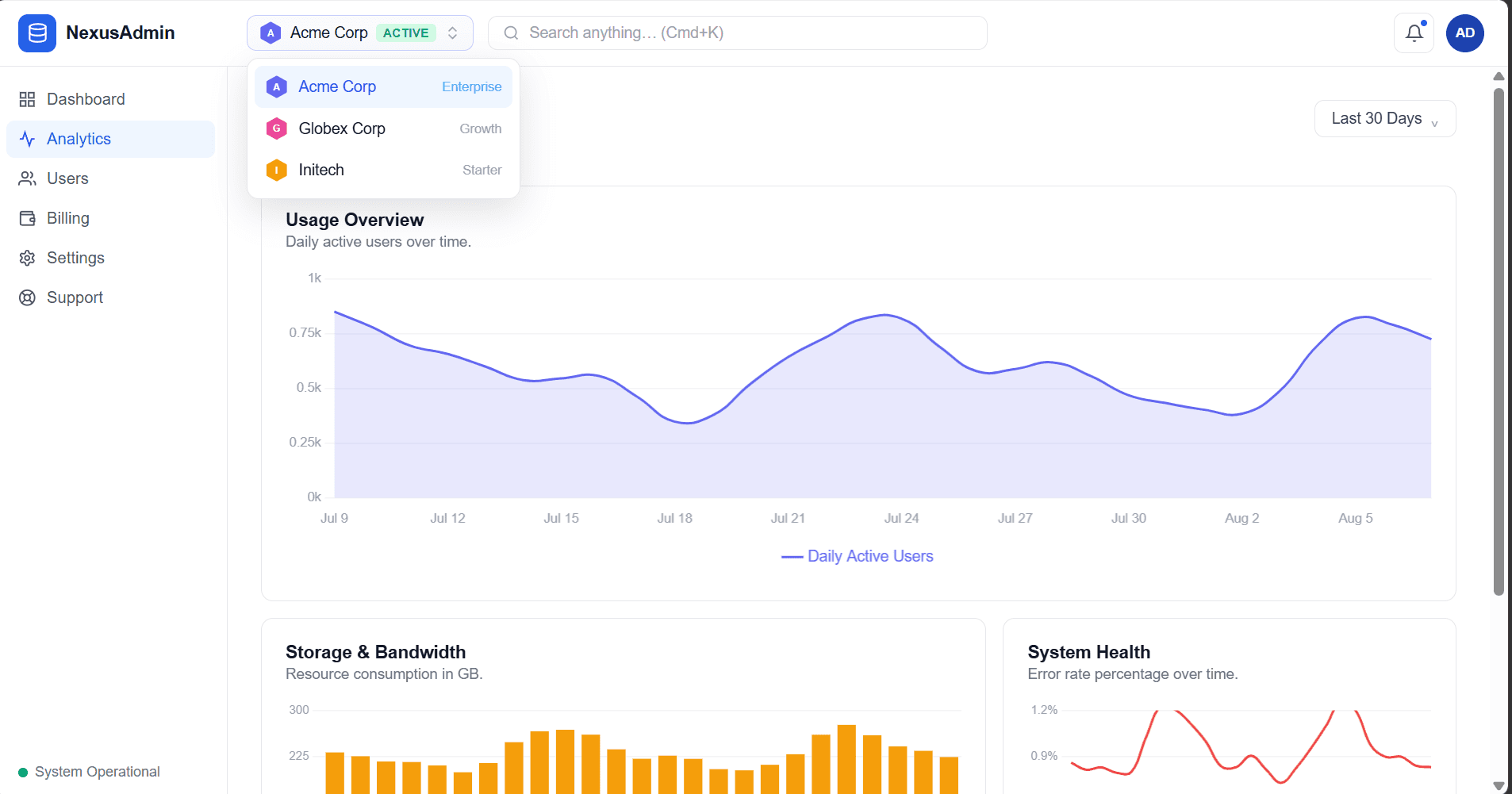

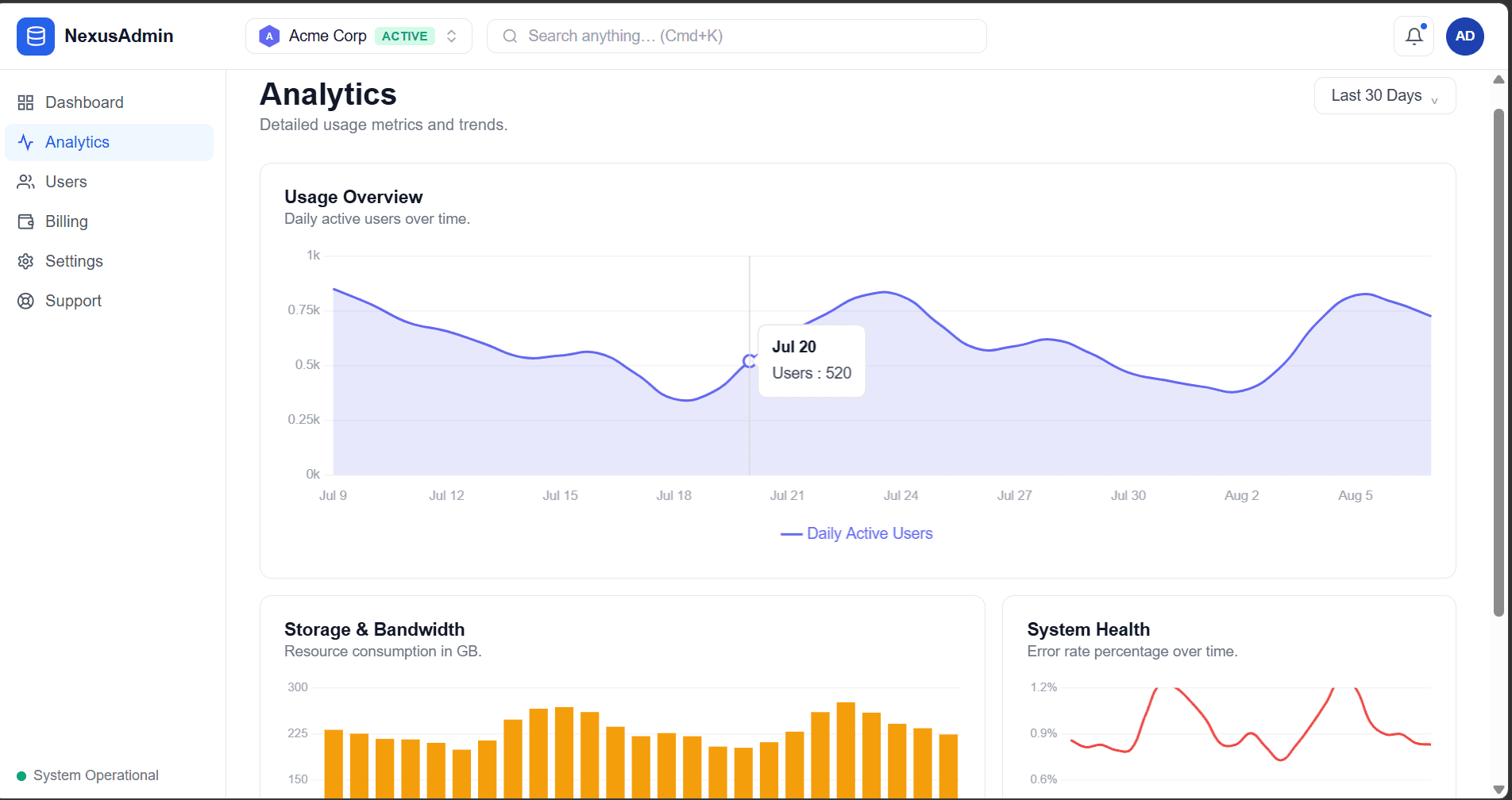

The delivered dashboard treats tenant identity as a first-class visual signal color, logo, and name repeated consistently from switcher to header to settings breadcrumb, so context is confirmed at a glance rather than read. Settings were re-organized around what admins are trying to do, not how the backend is organized. Usage and billing were reframed from raw data dumps into "here's what changed and why," matching the actual question admins showed up with in research.
Impact:
Average tenant-switch time dropped from ~14 seconds to under 3
Support tickets related to "wrong tenant" configuration errors declined
Finance and tenant-admin billing questions shifted from support tickets to self-serve views within the dashboard